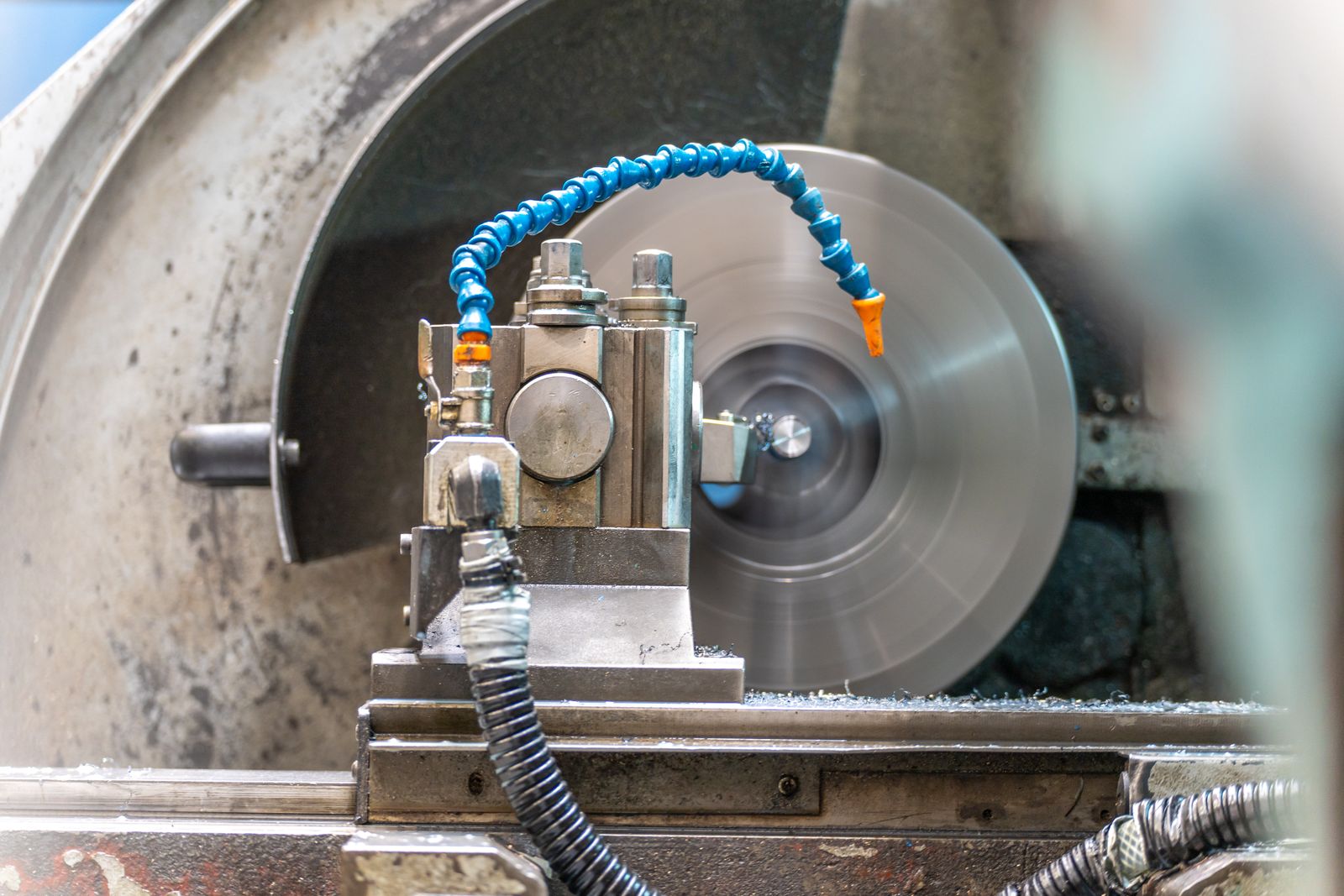
Turning and driven-tool milling in a single setup — complex rotational parts for automation and robotics, well suited to small batch and multi-feature work.
On a turn-mill (mill-turn) machine, the workpiece stays fixtured while turning and driven-tool milling operations run in the same cycle. This matters for parts that are mainly rotational but also carry flats, cross-holes or milled features.
Milled features are cut against the same datum as the turned surfaces, avoiding tolerance stack-up from a second clamping.
Turning, milling, drilling and tapping flow in one program, reducing transfers between separate lathe and mill.
Practical for parts with flats, cross-holes, off-axis holes, slots and other milled features around a turned body.
Machine configuration (axis arrangement, spindle setup) is matched to the part and confirmed at quotation — see notes below.
Placeholder cards — line icons and parameter text only; real part photography replaces each card once approved samples are available.
Connectors combining threads, flats and drilled features in one cycle.
Stepped shafts with milled flats squared to the turned axis in one setup.
Radial and cross-drilled holes positioned against turned datums.
Rotational bodies needing several turned and milled operations without re-fixturing.
Small fittings and compact bodies with bores, taps and milled faces.
Low and medium quantities where one-setup processing saves handling.
Materials: steel, stainless steel and copper / brass standard — other grades, including aluminium, on request.
View materialsShare your drawing, material and quantity on WhatsApp or email. We review the turn-mill process and machine fit, then reply with pricing within 24 hours on working days.